Nexen precision brakes
Hold Servo and Ball Screw Axes Exactly in Place
When a servo motor loses power, a heavy or vertical load can turn the screw and drop. Nexen precision brakes clamp on with springs the moment air is lost, and hold with no play at all.
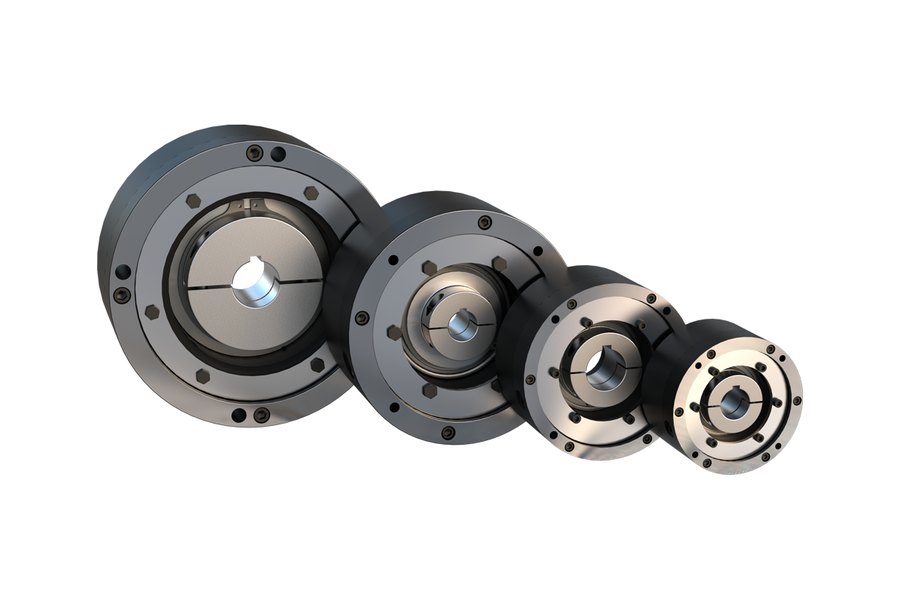
- No playZSE shaft brakes
- 125 N·mball screw brakes, max. holding
- IP67dust- and waterproof (ball screw brakes)
- 62 partsbrakes and couplings
The range
Precision Brakes
ZSE Shaft Brakes
Spring-applied shaft brakes with no play, a hollow centre and light moving parts.
- 32 parts
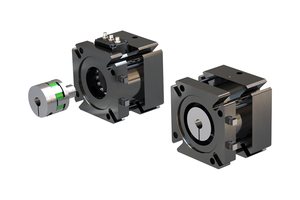
Ball Screw Brakes
Fit the free end of a ball screw to stop it turning if power is lost. Dust- and waterproof (IP67).
- 6 parts
Ball Screw Brake Couplings
Join the brake to the ball screw.
- 19 parts
I300 High-Torque Brake
No-play holding for bigger loads.
- 5 parts
How it works
How Precision Brakes Work
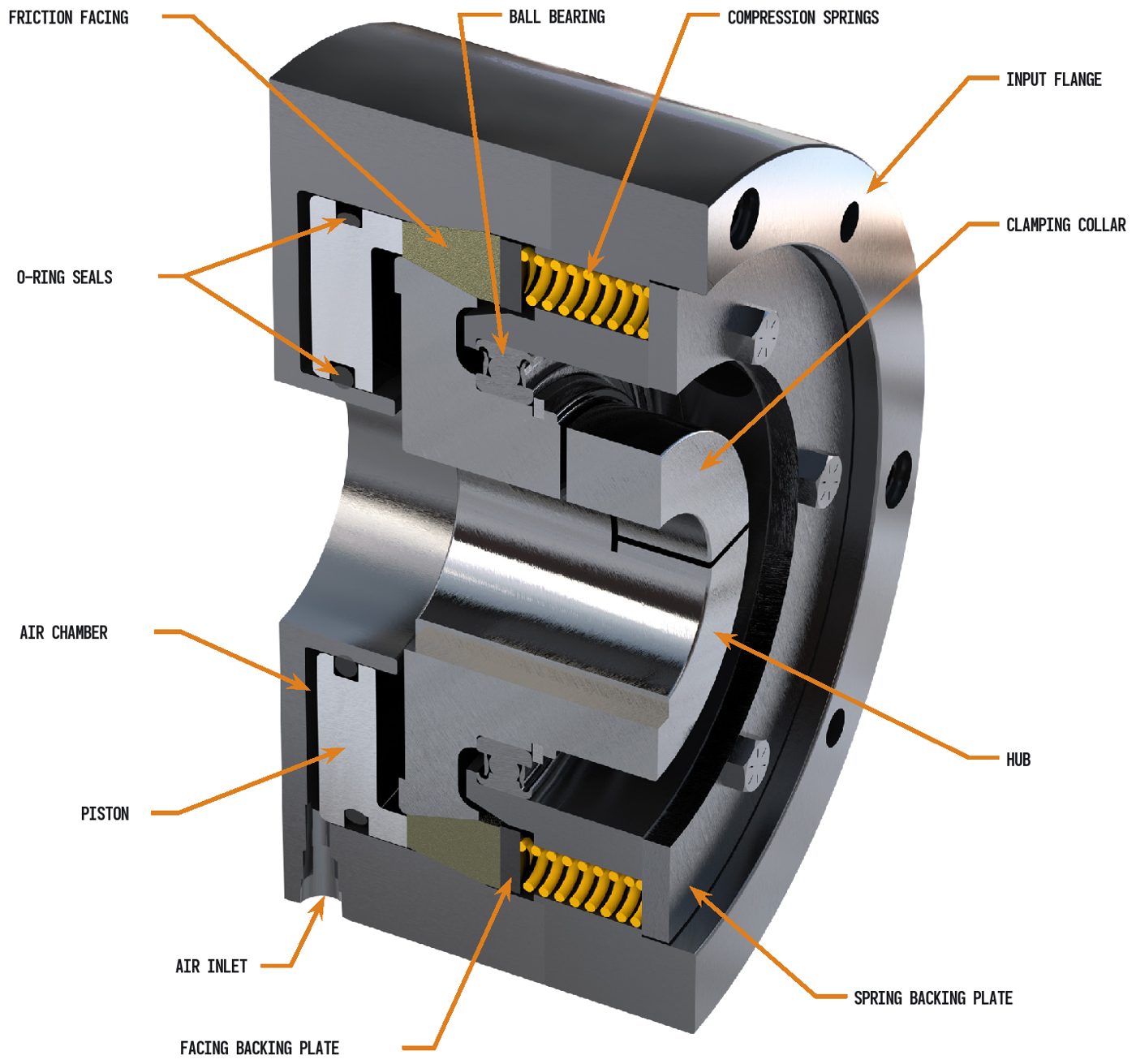
A precision brake holds a servo axis exactly where it stopped. Springs clamp it; air releases it – so a load can’t drop or drift if the power goes.
What’s Inside
Springs push the piston and friction facing against the hub to hold the shaft. Air in the air chamber pushes the piston back and frees it.
True Zero Backlash
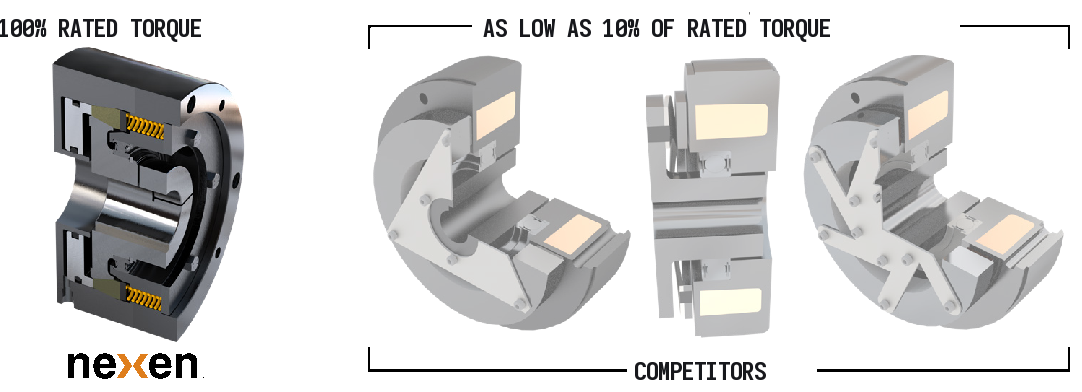
Some brakes only hold without play up to about a tenth of their rated torque. The ZSE holds without play right up to 100% of its rating.
Ball Screw Brakes
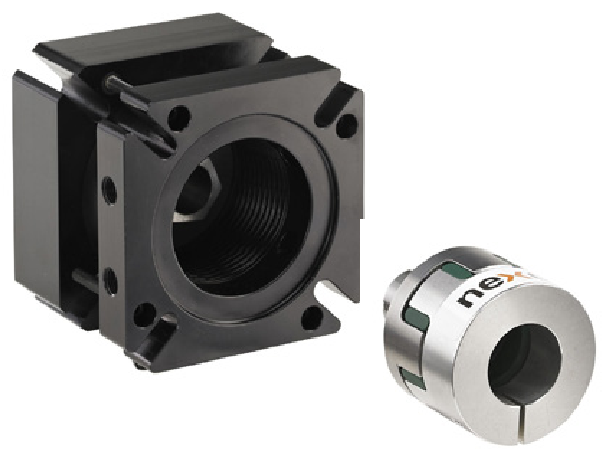
A ball screw brake fits the free end of the screw with a matching coupling. If the motor or belt fails, it still stops the screw turning and the load dropping.
How Much Holding Torque?
A load on a ball screw tries to turn it – that’s back-drive torque. Pick a brake that holds 20–30% more than this.
Ball screw back-drive torque
Back-drive torque = load force × lead × efficiency ÷ 2π (ball screw brake data sheet, p. 4). Pick a brake that holds 20–30% more.
Why Nexen precision brakes
Hold the Load, Not Just the Motor
A Second Line of Defence
A ball screw brake fits on the far end of the screw, so it still holds if the motor or coupling fails.
No Play
ZSE brakes hold without any movement, so position is kept exactly.
Fails Safe
Air holds them off; springs clamp them on. No electric brake heat or wear.
Smart Option
ZSES brakes have built-in sensors that confirm release and report temperature.
Literature & related
More Information
- Ball Screw Brakes (21694)
Brakes and couplings - Zero Backlash Spring Engaged Shaft Brake (21289)
ZSE sizes and ratings - I300 High Torque Zero Backlash Brake (21243)
I300
Not Sure Which Precision Brake You Need?
Tell us what the machine has to do – the load, the speed, how often it runs and the space you have – and we’ll help you choose the right Nexen product.