NexSafe rod locks
Hold the Rod When the Air Goes
A rod lock grips the rod of an air cylinder. Springs clamp it the moment air pressure drops, so the load stays put during a power cut, an emergency stop or maintenance.
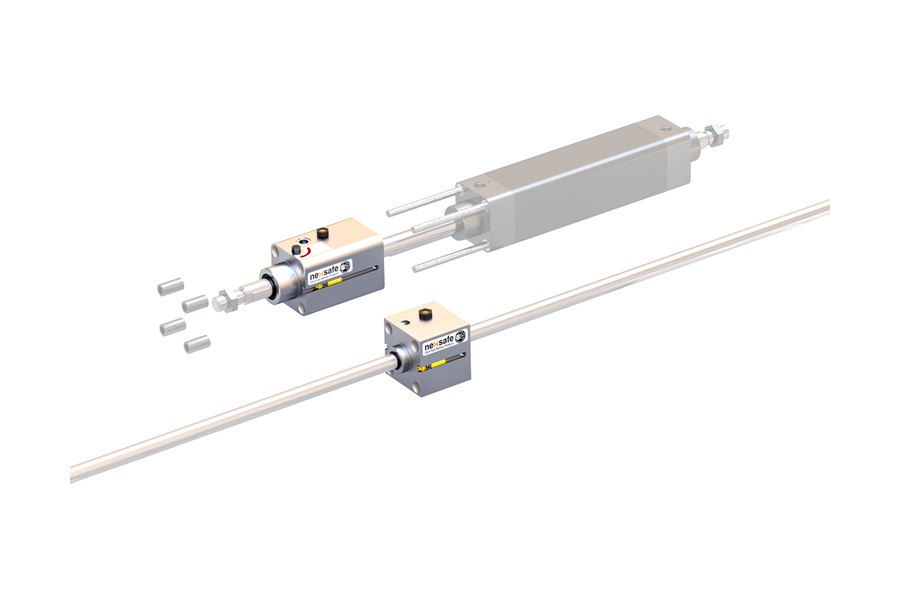
- 8,560 Nmax. holding force, metric (2,830 lb inch)
- PL e · Cat 4safety rating (ISO 13849-1), fitted as Nexen recommends
- NFPA & ISOinch and metric cylinders
- 133 partsrod locks and air controls
The range
Rod Locks
Rod Locks with Manual Release
Can be released by hand, to move the load without air.
- 57 parts
Rod Locks Without Manual Release
Cylinder-mount and stand-alone models, inch and metric.
- 72 parts
Air Controls
The valves and fittings that release and set the lock.
- 4 parts
How it works
How Rod Locks Work
A rod lock is a clamp that sits on the rod of an air cylinder, or on a guide rod. Air holds it open; springs close it. So if the air supply is lost – on purpose or by accident – the rod is gripped and the load stays where it is.
What’s Inside
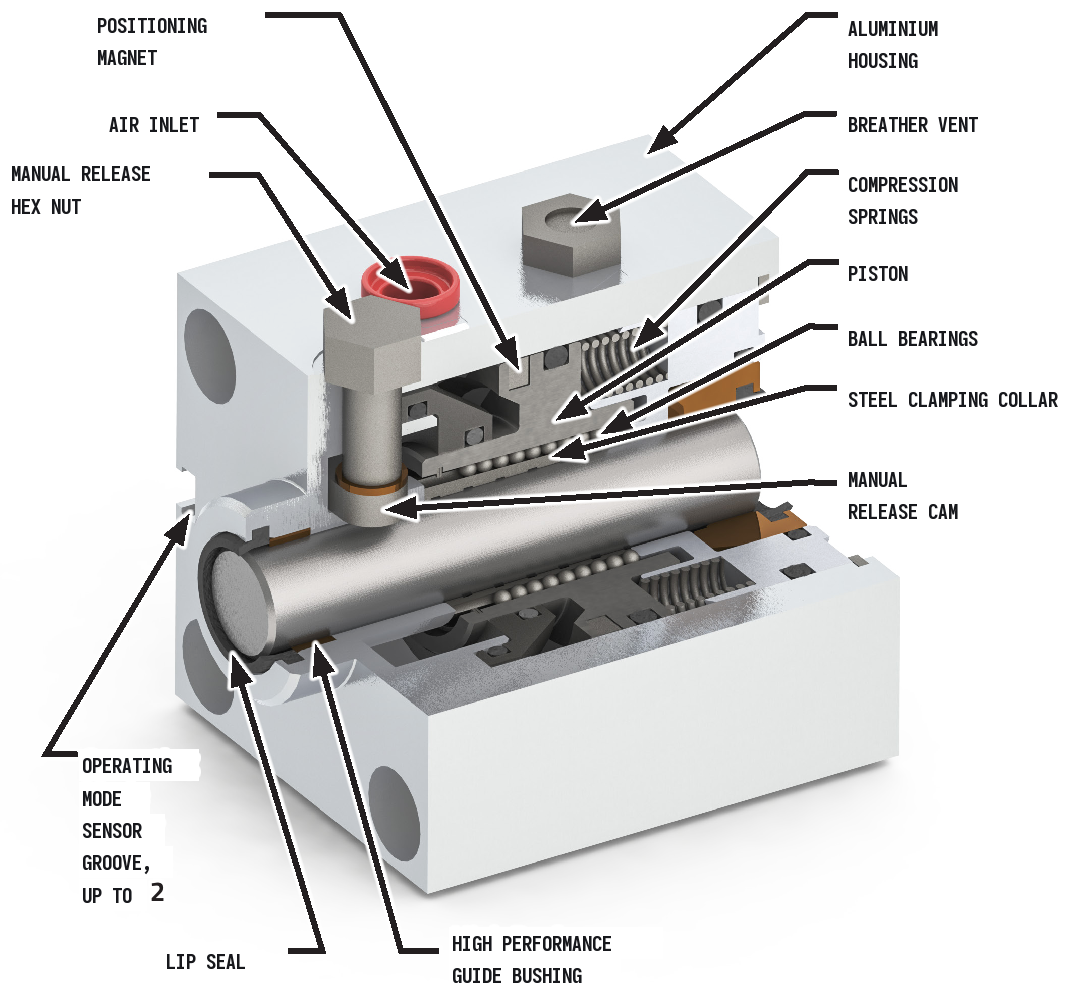
Air comes in through the inlet and pushes the piston back against the springs. That lets the steel clamping collar relax, so the rod slides freely.
Let the air out and the springs push the piston forward. The collar squeezes the rod and it locks – in either direction.
Models with a manual release have a cam you can turn by hand, to free the rod without air.
Plumbing the Air
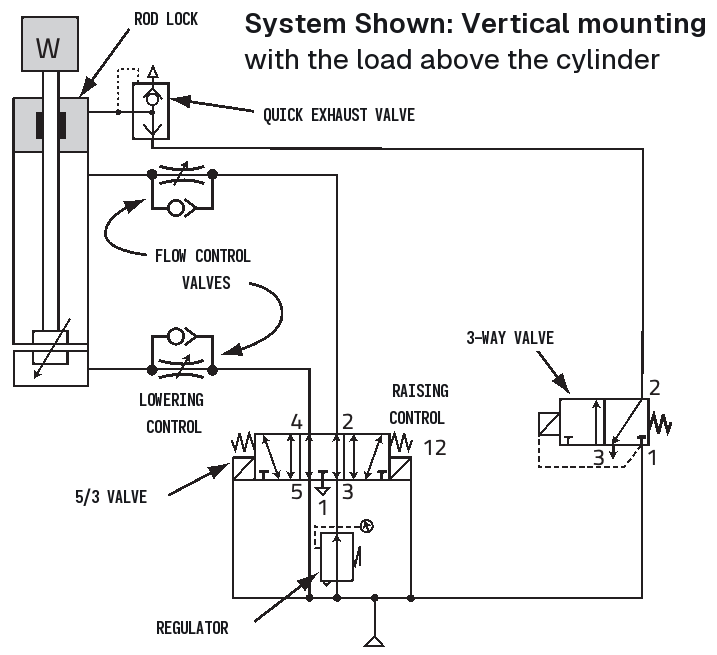
A normally-closed 3-way valve feeds air to the rod lock. While the valve has power the lock stays open; cut the power, the air vents and the lock clamps.
A quick exhaust valve on or near the lock lets the air out faster, so it clamps sooner.
Drive the cylinder with a 5/3 valve that has an open centre – not a closed centre, which can unbalance the piston if a line leaks.
The lock needs 4.1 bar to release (8.3 bar at most) of clean, dry, regulated air. No oiler needed.
Knowing It’s Clamped
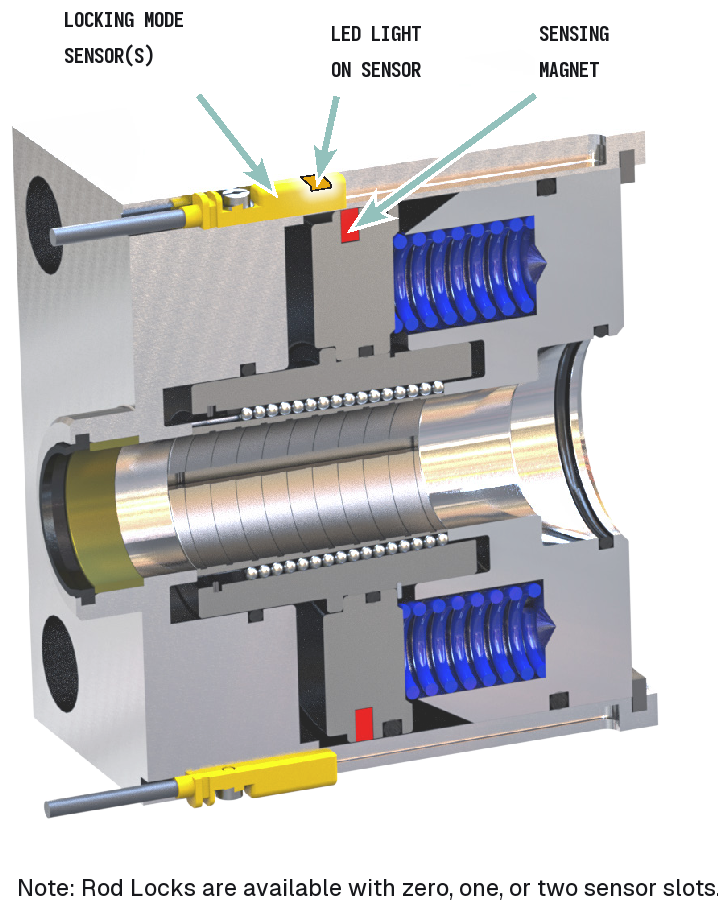
Optional sensors in the body report whether the lock is clamped or released. They can signal either state, singly or in pairs, in PNP or NPN.
Using them can help a machine builder reach a higher safety category under ISO 13849-1, and the signals help with position checks and planning maintenance.
Stopping a Moving Load
Rod locks are made to hold a load that’s standing still. They can also stop a moving load in an emergency – now and then – as long as it stops within 100 mm.
Regular stopping (up to half the rated force, at up to 1.5 m/s) is possible on most sizes, but it voids the NexSafe safety rating.
Try your own numbers here – the calculator follows Nexen’s worked example.
E-stop stopping distance
Holding force and engagement time are in the rod lock tables (data sheet pp. 4 and 6). Follows Nexen’s sample calculation (p. 9) – a guide only; check your design with us.
Reading the Part Number
Each part of the model number means something. In SAFE-RLSSB-200-100-C-A-MR: SAFE = safety rated; RLS = rod lock, static; S = spring engaged; B = sensor option; 200 = 2" cylinder; 100 = 1" rod; C = cylinder mount (S = stand-alone); A = anodised (N = natural); MR = manual release.

Look After the Rod
The lock grips by friction, so the rod matters. It should be hardened, ground and chrome plated, within h8 tolerance, and kept clean and dry – oil or wear on the rod lowers the holding force.
Why NexSafe rod locks
Safety-Rated Holding You Can Rely on
Fails Safe
Air holds it open. Lose the air and the springs clamp the rod.
Strong Grip
A large clamping area holds hard. Stack two or more for extra force.
Tough Finish
Sealed, in brushed or anodised aluminium.
Tells You Its State
Optional sensors report whether it’s clamped or released, for safety checks and maintenance.
Literature & related
More Information
- Linear rod locks data sheet
Sizes, holding forces and air controls
Not Sure Which Rod Lock You Need?
Tell us what the machine has to do – the load, the speed, how often it runs and the space you have – and we’ll help you choose the right Nexen product.