NexSafe rail brakes
Brake on the Rail Itself
A rail brake rides on a linear guide rail like a bearing block. If the power or air fails, springs clamp it to the rail and hold the load – without touching the surfaces the bearings run on.
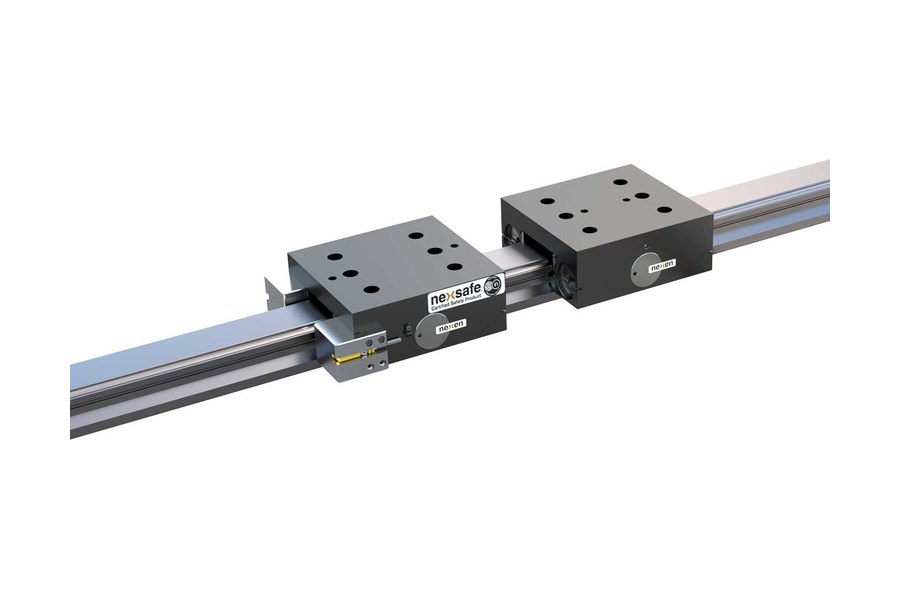
- 500–2,600 Nholding force, sizes 15 to 45
- 0.044 sfastest clamp time
- PL e · Cat 4safety rating (ISO 13849-1), fitted as Nexen recommends
- 14 rail makersTHK, HIWIN, Rexroth, NSK and more
The range
Rail Brakes
RB Rail Brakes
Sizes 15 to 45 for the common rails. Pick your rail maker and type in the finder.
- 106 parts
RBL Large Rail Brakes
Sizes 55 and 65 for heavy machines.
- 12 parts
Status Sensors
Report whether the brake is clamped or released.
- 8 parts
How it works
How Rail Brakes Work
A rail brake rides on the guide rail beside the bearing blocks. Springs clamp it to the rail; air releases it. So if the air or power goes, the axis is held where it is.
What’s Inside
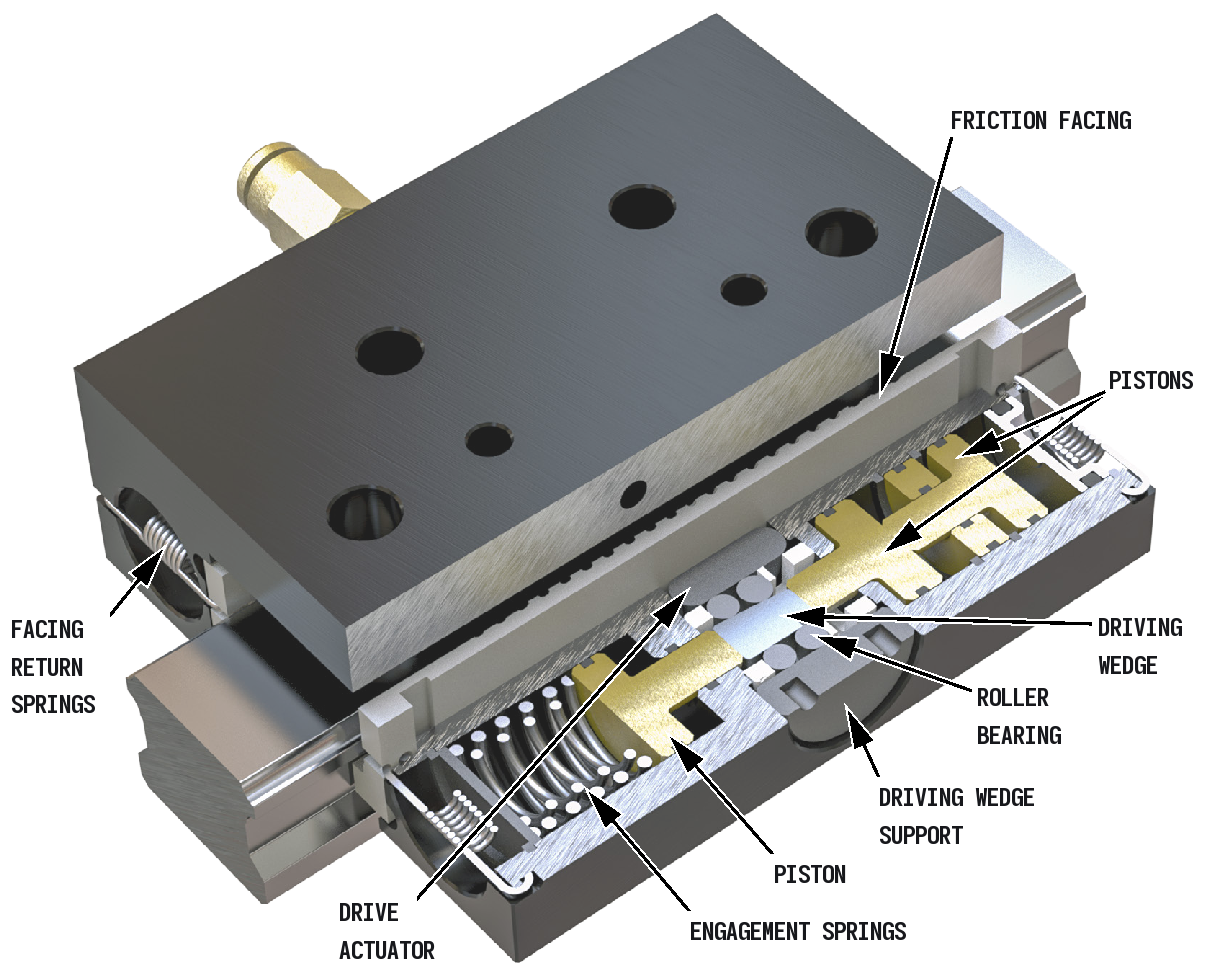
Springs push a wedge that forces the friction facings against the sides of the rail. Air to the pistons pushes the wedge back and lets go of the rail.
Where It Fits
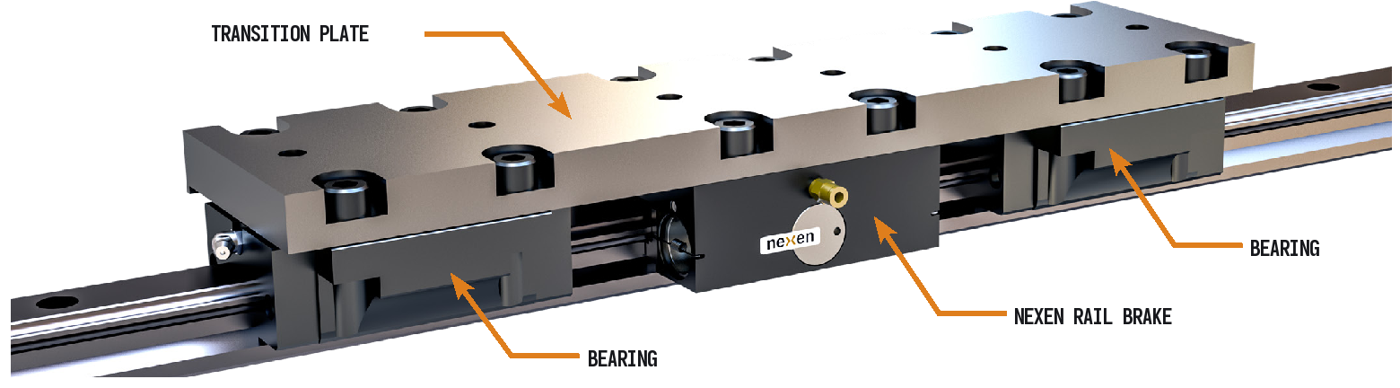
The brake runs on the rail between the bearing blocks, under the same carriage plate, so it holds the load right where it is.
The Air Circuit
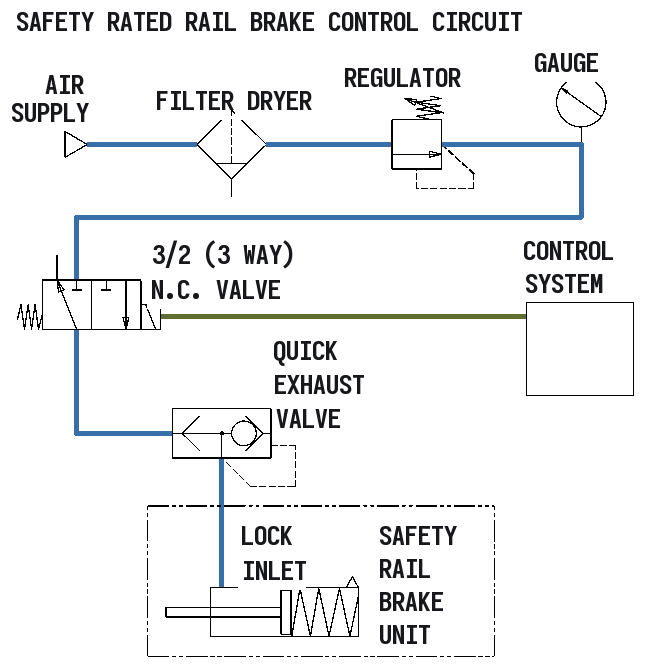
Air passes a filter, regulator and 3-way valve to release the brake. Cut the signal and the quick exhaust valve dumps the air so it clamps fast. Adding sensors, or a second brake, raises the safety category – from B up to 4.
Knowing It’s Clamped
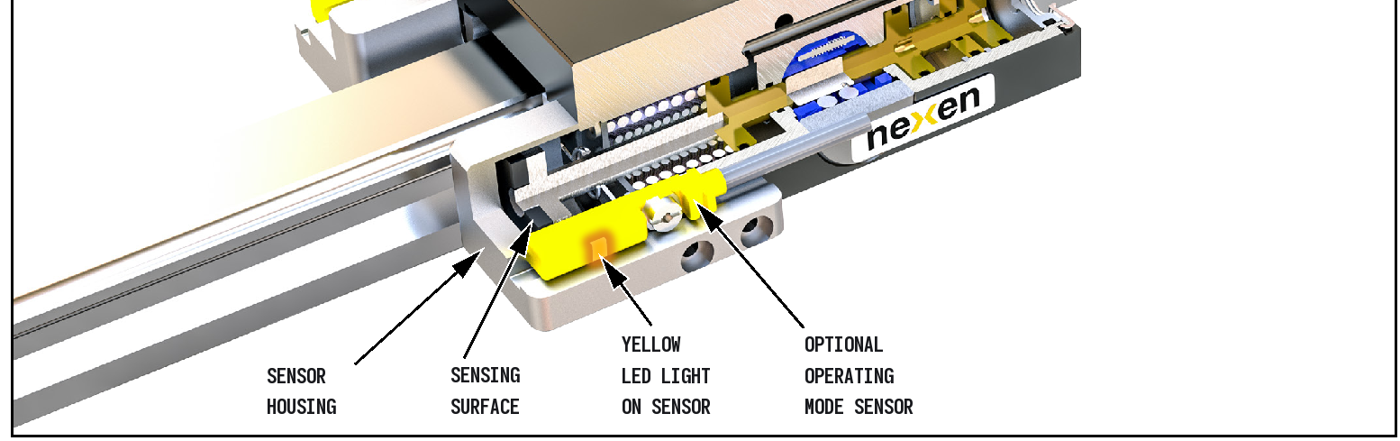
Optional sensors confirm whether the brake is clamped or released, for safety checks and maintenance.
Stopping a Moving Axis
Rail brakes are made for holding, but can stop a moving axis in an emergency. Check the stopping distance with Nexen’s worked example.
E-stop stopping distance
Defaults are Nexen’s RB25B example (data sheet p. 6). Holding force and engagement time for each size are on p. 3. A guide only – check your design with us.
Why Nexen rail brakes
Hold the Load Where It Is
On the Rail
Clamping the rail holds the load firmly in every direction, without wearing the bearing tracks.
A Stiffer Machine
Holding right at the load takes out play in the drive and cuts vibration.
Low Maintenance
No grease or regular servicing. The pads can be replaced on site.
Easy to Fit
Shaped like a bearing block, with room to allow for slight misalignment.
Not Sure Which Rail Brake You Need?
Tell us what the machine has to do – the load, the speed, how often it runs and the space you have – and we’ll help you choose the right Nexen product.