
Certified Safety Brakes That Hold When Air or Power Is Lost
NexSafe rod locks, rail brakes and servomotor brakes are held off by air and clamped on by springs. Lose the air or the power and they lock – so a load can’t drop or drift during an emergency stop, a power cut or while someone is working on the machine.
- ISO 13849-1safety rated, certified by Intertek
- Cat 4 · PL eachievable when fitted as Nexen recommends
- SIL 3on the Intertek certificates
- Default to locksprings clamp the moment air is lost
How it works
Spring Engaged, Air Released
- Air holds it open In normal running, air pressure holds the springs back and the brake stays off the rail, rod or shaft.
- Springs clamp on If air or power is lost – or the safety system vents the valve – several springs clamp the brake on.
- Sensors report back Optional operating mode sensors tell the control system whether the brake is on or off, so a fault can be caught before it matters.
- Released only on purpose It stays locked until air is back. Rod locks also have a manual release for maintenance.
The range
Three Ways to Hold a Load
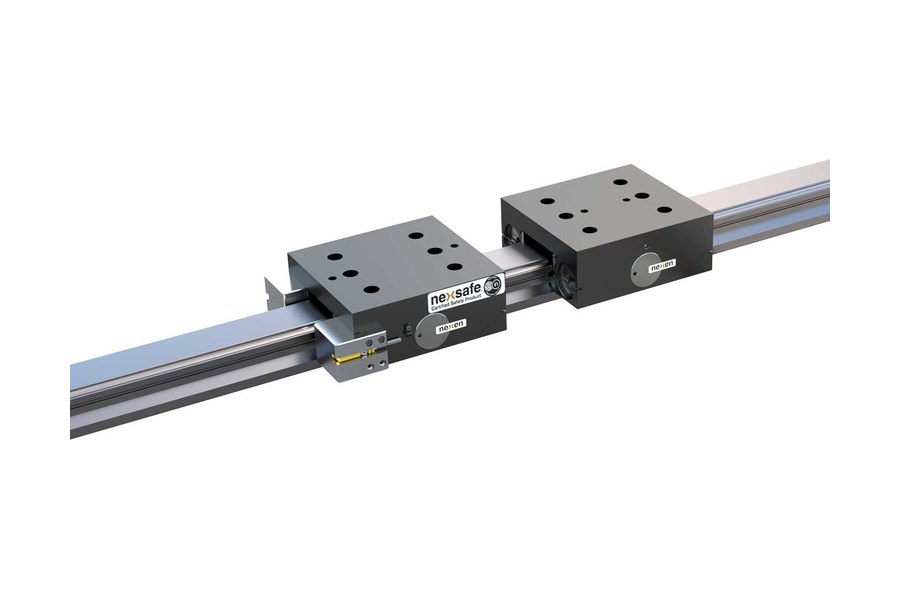
Guide rails
Rail Brakes
Clamp straight onto a profile guide rail, next to the carriages, and hold the axis in any direction. Fits most common rail makes and sizes.
- B10D 4 million cycles
- Up to two operating mode sensors
- Certificate FS-CRT-0006
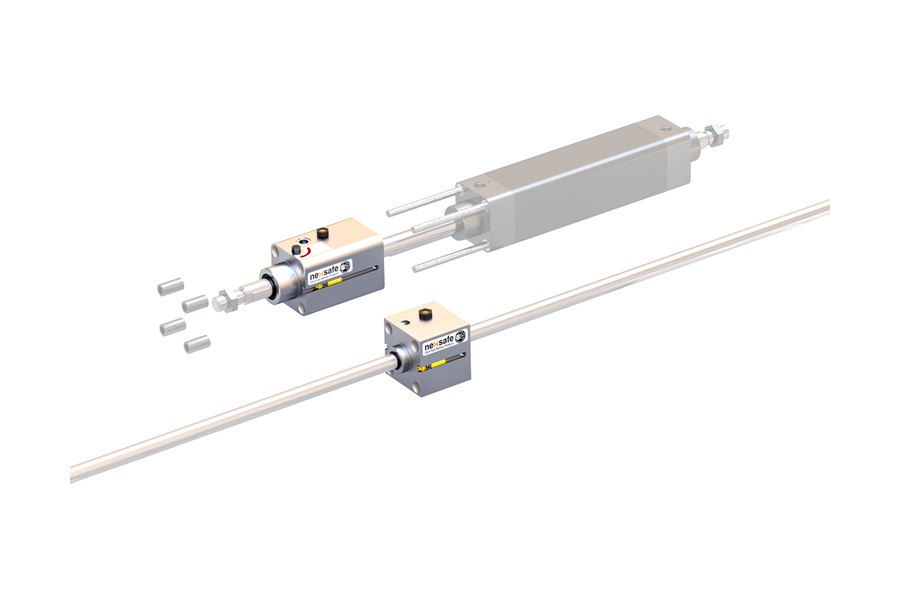
Cylinder rods & guide rods
Rod Locks
Mount on the end of an NFPA or ISO air cylinder, or stand alone on a guide rod, and clamp the rod without moving it. Sealed to IP67, with a manual release.
- B10D 2 million cycles
- Up to two operating mode sensors
- Certificate FS-CRT-0007
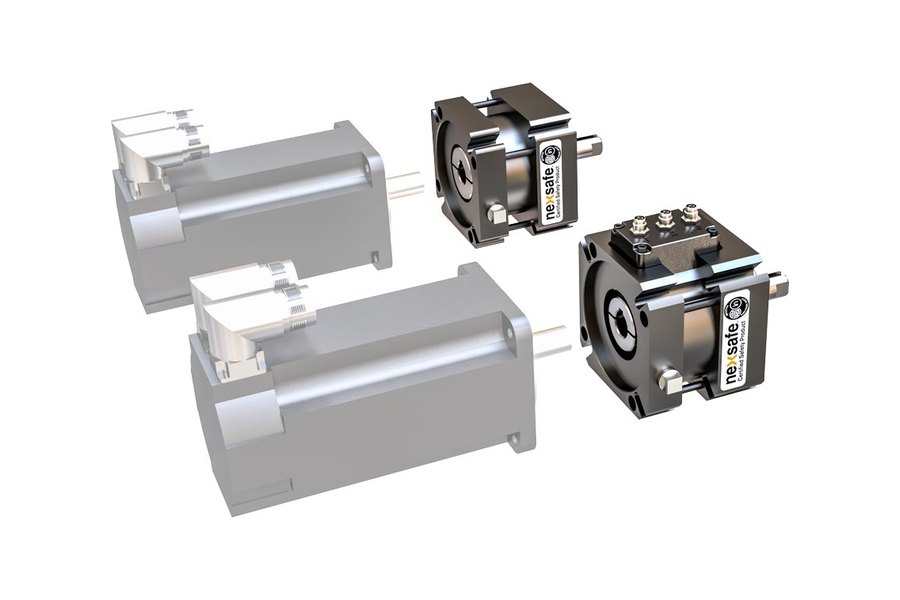
Servo axes
Servomotor Brakes
Fit between a servomotor and its load and hold the shaft with zero backlash. Strong enough to stall the motor, so an axis stays put if a belt breaks or the power drops.
- B10D 2 million cycles
- Up to three operating mode sensors
- Certificate FS-CRT-0008
What the ratings mean
Certified, in Plain Terms
ISO 13849-1
The international standard for the safety-related parts of a machine’s control system. Intertek, an independent test lab, has certified NexSafe brakes against it.
Category (B to 4)
How the safety function is built. Category B is a single brake with no checking; Category 4 uses two brakes, each watched by sensors, so one fault can’t stop it working.
Performance Level (a to e)
How unlikely a dangerous failure is. PL e is the highest. Your risk assessment sets the level the machine needs.
B10D
The number of cycles before 10% of brakes could fail in a dangerous way: 4 million for rail brakes, 2 million for rod locks and servomotor brakes.
How to choose
Build Up to the Safety Level You Need
One Brake, No Sensors
Category B or 1 – Performance Level a to c. Fine for lower-risk holding.
One Brake with Sensors
Category 2 – up to PL d. The sensors let the control system check the brake works.
Two Brakes, Sensors on Each
Category 3 – up to PL d, or PL e with rail brakes. If one brake fails, the other still holds.
Two Brakes, Two Sensors on Each
Category 4 – PL e. The control system compares all four sensors before each use.
NexSafe brakes are certified components. The rating of the whole safety function – brakes, valves, sensors and controls together – is the machine builder’s responsibility. The Safety Application Guide below shows a setup example for each category.
Literature & related
More Information
- NexSafe Safety Application Guide
Safety ratings and setup examples for rod locks, rail brakes and servomotor brakes - Linear rod locks data sheet
Safety ratings, wiring examples for each category and e-stop sizing - Linear Motion Control (21327)
NexSafe rail brakes and their safety ratings - Servomotor Brakes (21215)
Eclipse and NexSafe servomotor brakes - Nexen Engineered Solutions
Custom designs from Nexen
Need a Safety Brake for Your Machine?
Tell us what the machine has to do – the load, the speed, how often it runs and the space you have – and we’ll help you choose the right NexSafe brake.